Kashmir and H.P. apple growers fear a flood of cheap New Zealand imports if duty is cut under trade deal
[Sourced from The Hindu dated January 8. We thankfully acknowledge it.]
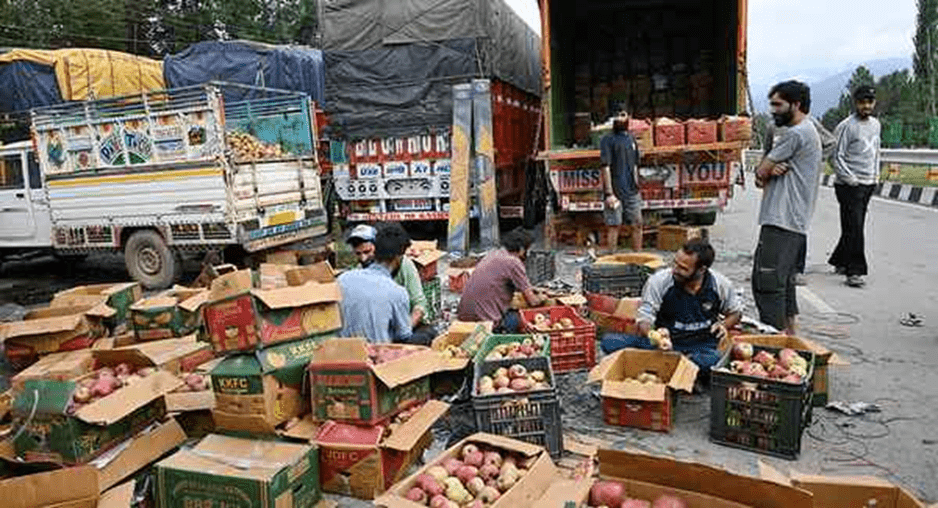
In Kashmir, 15 lakh families are associated with the apple trade, and it generates ₹30,000 cr. annually. Himachal produces apples worth ₹5,000-6,000 cr. annually, engaging over 1.5 lakh families.
Apple growers in Kashmir and Himachal Pradesh are presently beset by the prospect of imported produce from New Zealand flooding the market once duties are reduced as part of a new free trade agreement (FTA) between the two countries.
“Indian farmers rely on controlled-atmosphere cold storage to sell apples during the off-season, when they earn prices that sustain their families for the entire year. With reduced import duty, fresh New Zealand apples will enter Indian markets at lower prices, directly undercutting Indian apples stored in cold facilities,” Izhan Javed, an apple dealer and spokesperson of the J&K Fruits and Vegetables Processing and Integrated Cold Chain Association, told The Hindu.
Traders fear that the agreement, which proposes to reduce the import duty from 50% to 25%, could hit apples stored for the off-season trade hard. There are presently 397.08 lakh metric tonnes of apples in 92 cold storages across Kashmir.
“Over the last decade, farmers and industry have invested heavily in cold storage infrastructure. The FTA threatens to make these investments economically unviable, endangering the entire post-harvest ecosystem built with public and private capital. The trade deal has the potential to destroy off-season price stability and push farmers back into distress sales,” Mr. Javed said.
Higher productivity
Specifically, the Gala variety of apples introduced to orchards in Kashmir recently will be the first to take a hit. “India has only recently begun shifting to international apple varieties such as Gala. New Zealand has been producing these varieties for over 50 years, with 8–9 times higher productivity and much lower costs,” Mr. Javed added.
In Kashmir, 15 lakh families are associated with the apple trade, and it generates ₹30,000 crore annually.
Flooding of the market with cheap imports is a common refrain amongst apple growers in Himachal Pradesh too, which produces apples worth ₹5,000-6,000 crore annually and engages over 1.5 lakh families.
Kuldeep Singh Rathore, Congress MLA from Theog constituency in Shimla district, expressed alarm over the import duty issue, noting that implementing the FTA with New Zealand in its current form would establish a perilous precedent.
Questions
Q1. Why are the apple growers of Jammu and Kashmir and Himachal Pradesh so aggrieved by the recent Free Trade Agreement signed by India with New Zealand? (Long answer in two paragraphs to be written in your own language.)
Q2. If this FTA so harmful, why did India sign it with New Zealand? (Long answer. Consult Google, if required.)
Q3. What is meant by ‘Distress Sale’? What is meant by ‘undercut’?
Q4. Make sentences with Alarm as noun, Alarm as verb, Precedent as noun, Peril as noun, Perilous as adjective, Flood as noun, Flood as verb, Produce as verb, Produce as noun. Hit as noun, Hit as verb, Hit as adjective
Questions and Answers
Q1. Why are the apple growers of Jammu and Kashmir and Himachal Pradesh so aggrieved by the recent Free Trade Agreement signed by India with New Zealand? (Long answer in two paragraphs to be written in your own language.)
Model answer .. The recently signed FTA (Free Trade Agreement) with New Zealand envisages a reduction in import duty on apples from that country to 25% from 50%. . This has caused a good deal of anxiety among the apple growers of Jammu and Kashmir and Himachal Pradesh. New Zealand apples are of good quality and relatively cheaper than those produced in these two states. Competing for market share of apples was, therefore, not easy for Indian growers. The original 50% import tariff made the New Zealand apples costlier than the Indian fruits offering some degree of protection to local growers. With the reduction in import duty by half, this price competitiveness of Indian apples will be lost. Indian farmers will struggle to sell their products.
In the past, Indian apple farmers, traders and local government collaborated to build widely spread cold storages that helped the apple growers to preserve their extra harvest in these stores, In off seasons, the farmers take out these preserved apples and send it to the market at reasonable rates. Such a practice ensured steady earnings for the farmers round the year. The consumers also got uninterrupted supply of nicely preserved apples in off seasons.
———————————–.
Q2. If this FTA so harmful, why did India sign it with New Zealand? (Long answer. Consult Google, if required.)
Model answer…. Considerable thought was given by the Indian government’s commerce ministry before mulling over the idea of a FTA with New Zealand. This small neighbour of Australia is a rich country with high per capita income. Consumer spending is, therefore, quite high. Its agricultural and tourism sectors are very vibrant. India produces a wide array of goods and services that can be sold to the consumers and corporates in New Zealand. The list of goods that India can export to New Zealand include pharmaceuticals, textiles, engineering products, steel and Aluminum, and of course, very highly qualified manpower to man the country’s banking, tourism, and IT sectors. New Zealand can offer India its agricultural produce, dairy products, and access to its premier universities for Indian students. Weighing all such overwhelming advantages, India agreed to sign a FTA with New Zealand.
However, no FTA comes without any disadvantages. One risk the FTA carries is the possibility of the superior quality New Zealand Apples flooding Indian markets after the import duty is axed by half. This is a real risk that imperils the apple growers of Jammu and Kashmir and Himachal Pradesh. It’s hoped that Indian apple growers will show their historic resilience to stave off this risk posed by cheap imported apples.
———————————————————-.———-
Q4. Make sentences with Alarm as noun, Alarm as verb, Precedent as noun, Peril as noun, Perilous as adjective, Flood as noun, Flood as verb, Produce as verb, Produce as noun. Hit as noun, Hit as verb, Hit as adjective
Alarm (noun) – The Pahalgam tourist massacre created considerable alarm in the region resulting in a sharp fall in tourist inflows.
Or
The sudden spike in the body temperature of my grandmother created alarm in the joint family.
Alarm (verb) – Trump’s sudden armed intervention in Venezuela and arrest of its president has alarmed the smaller countries in the region.
Precedent (noun) – While passing a judgement over constitutional matters, Supreme Court judges become extra careful because such verdicts create precedent for future cases.
Peril (noun) – The perils of the Satkosia gorge in Odisha does not deter tourists. Instead, it attracts visitors who feel thrilled to see the gorge and the crocodiles living in it.
Perilous (adjective) – Swimming in a flooded river is always considered perilous even for veteran swimmers.
Flood (noun) – The boy received a flood of congratulatory messages after it emerged that he had stood first in the Board Examination.
Flood (verb) – The sudden collapse of the dam flooded large downstream areas.
Produce (noun) – Farmers often transport their farm produce by their bullock carts to nearby markets.
Produce (verb) – Burning of the large forest produced so much heat that the ponds inside it dried up.
Hit (noun) – The stick’s hit on my face left a deep scar.
Hit (adjective) – The Hindi film was a hit, as it attracted record crowds.
Hit (verb) – The batsman hit sixer creating a loud applause from the audience.